

The fear of failure drives me.
I grew up in a close-knit family. At first, we were upper middle class. My father ran a real estate business, and we never worried about money. Then, our town changed. It never recovered from the recession in the early 90s and the slump in home prices. My dad’s business dried up. We struggled financially.
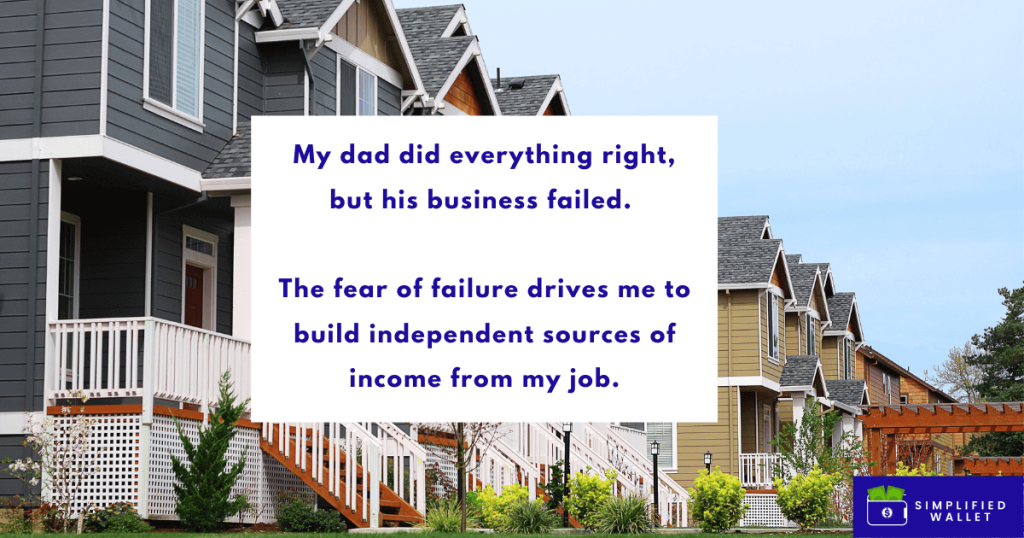
That fear of not having enough money in childhood has stayed with me. My dad did everything right, but his business failed. The fear of failure drives me to build independent sources of income from my job. I focus on mitigating risks in everything I do.
I like to watch movies and read books. Rick and Morty is my favorite show; it’s funny and intellectually stimulating. I read autobiographies and history books. I’m reading Stalin: The Court of the Red Tsar right now.
I am all about experiences. I love meeting people and traveling. You can learn something from everyone.
How did you get to where you are now?
I’ve had different jobs. I started as a management consultant. I went to business school and got a job in international finance. It felt too bureaucratic. So, I switched to working in mergers and acquisitions at a Fortune 500 company. I have changed jobs every 2 to 3 years since then – working in wealth management, financial consulting, and other sectors. My current job fits my lifestyle best. It’s 100% remote so I can travel for fun and for my rental properties while getting work done.
I bought my first multifamily property in 2018. It was on sale for $60,000. I paid $13,000 down and got a mortgage to cover the rest. I didn’t even own a home then. But once I saw that my tenants paid enough to cover the mortgage, repairs, and more, I knew I was on to something. I cashed out my 401K and bought more property. Now, I have 26 units.
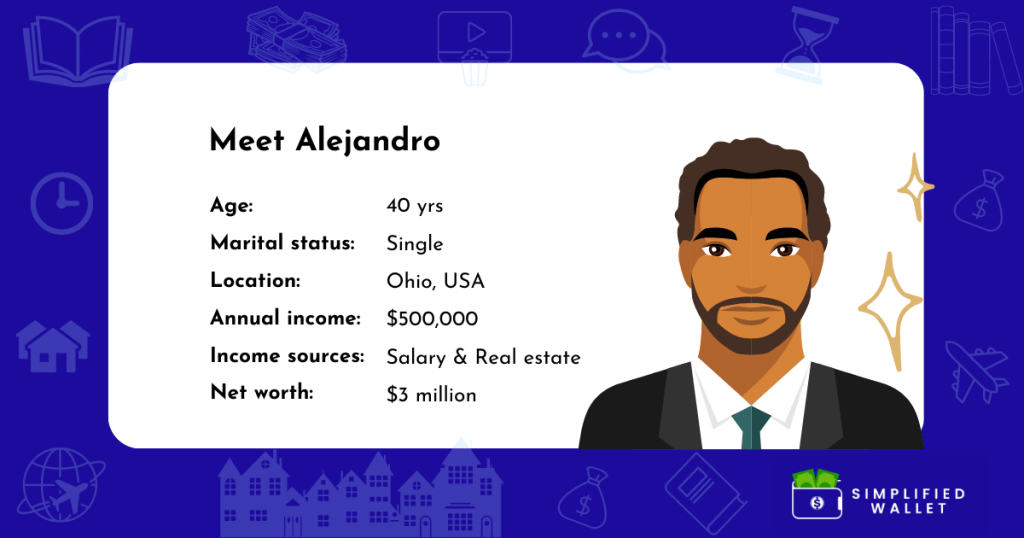
For privacy, several identifying information has been changed.
What’s your relationship with money?
Money is a means to an end. Society glorifies the pursuit of money. I have a different perspective. Money facilitates my journey through life. I see money as a tool to get me through roadblocks. I concentrate on having enough cash to meet my needs.
I worked for a billionaire in one of my jobs. He never knew how much he was worth, nor did he care how much he spent. It didn’t matter. He had enough money to meet his needs. I learned from his philosophy – set up your life to cover your needs. It frees you up to do what you want.
I focus more on time than money. Time is the most valuable resource. It’s tremendously more valuable than money. Make as much money as you need to afford your life. After that, spend your time on what you care about.
What’s the biggest money mistake you’ve made?
I don’t see anything as a money mistake. You learn. I paid thousands of dollars for an MBA. Some investments I have made haven’t panned out. I see them the same way I see my business school tuition – the price of knowledge.
What do you do with your money?
I make $25,000 to $30,000 monthly after tax from my salary and investments. About $15,000 comes from my salary, and $10,000 – $15,000 comes from investments. My investment income fluctuates depending on property expenses like fixing a roof or renovating a house. I’m always looking for new investments. I invest about $10,000 each month and spend the rest. My budget changes month to month. Here’s an example:
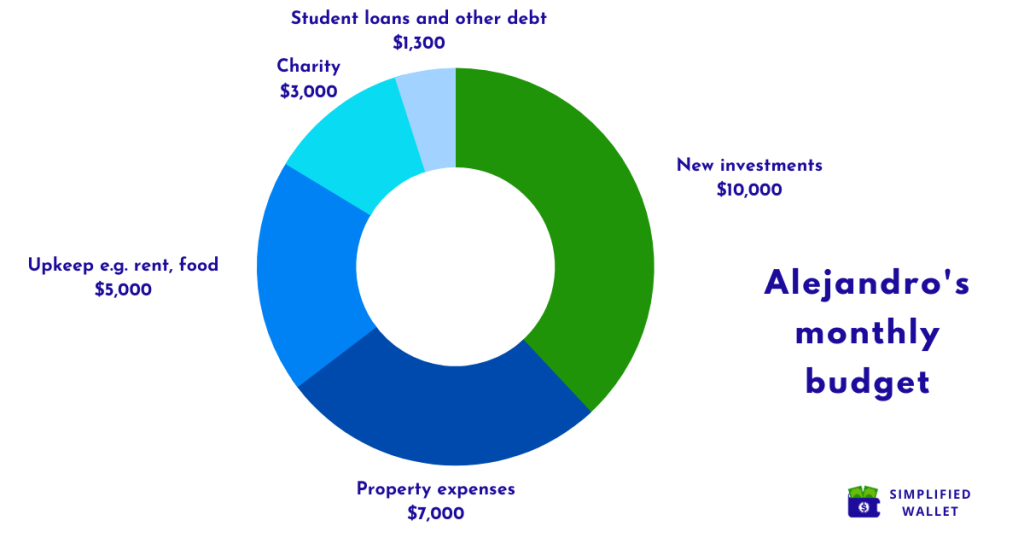
Monthly budget:
-
- New investments – $10,000
- Property expenses – $7,000
- Personal expenses (e.g., housing, food) – $5,000
- Charity – $3,000
- Student loans and other debt – $1,300
What purchase brought you the most joy last month?
I lost 25 pounds in the last year. All my clothes were too big. Last month, I got a bunch of new shirts that are perfectly my size. It feels great to wear clothes that fit!
What purchase do you now regret?
Nothing. I don’t regret spending, donating, or investing my money. I have set up my life such that money comes in each month. Even if I lose my job, my investments generate enough cash to cover my expenses. I spend whatever comes in on new investments, charity or life experiences. I don’t like to keep cash; too much temptation to spend it on things I won’t care about a week later.
What matters most to you?
I don’t know. Life is a journey. As I go through the journey, I try to experience as much as possible. I’m very intentional about relationships and how I spend my time. Once time is gone, you can’t get it back. We can never get back the 45 mins of this interview.
You have to be intentional. You can use time to change your life. Carve out 2 to 3 hrs a day and spend it on something that will fundamentally improve your life. For instance, spend it earning a Ph.D. in Computer Science or starting a business. In 5 years, those hours would have paid off. I went from a net worth of $300,000 to $3 million in 5 years by using my time outside work to improve my life.
You can use time to change your life … I went from a net worth of $300,000 to $3 million in 5 years by using my time outside work to improve my life.
What does financial success look like for you?
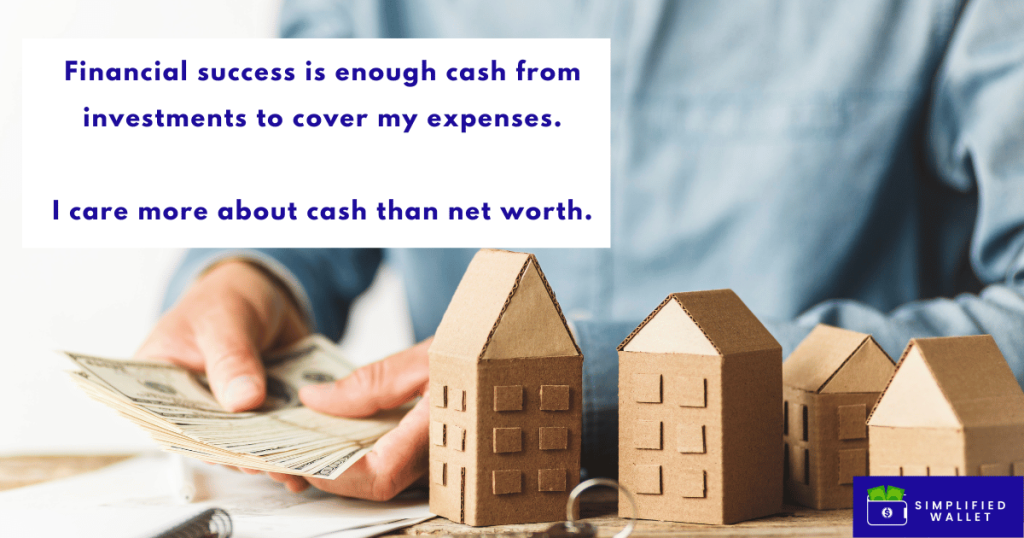
Financial success is enough money coming in to cover my expenses. I want recurring sources of cash like rental income. My goal is to make more money than I can spend. If I don’t make enough money, I spend less.
I care more about cash than net worth. My net worth is just a number. How much cash comes in each month is more vital. With a massive net worth but no cash, you worry about what you can sell to get cash. The value of what you own can change with market dynamics that are outside your control. When you need to sell, the property or stock that made up your net worth could be worth less than you paid.
What advice do you have for beginner investors?
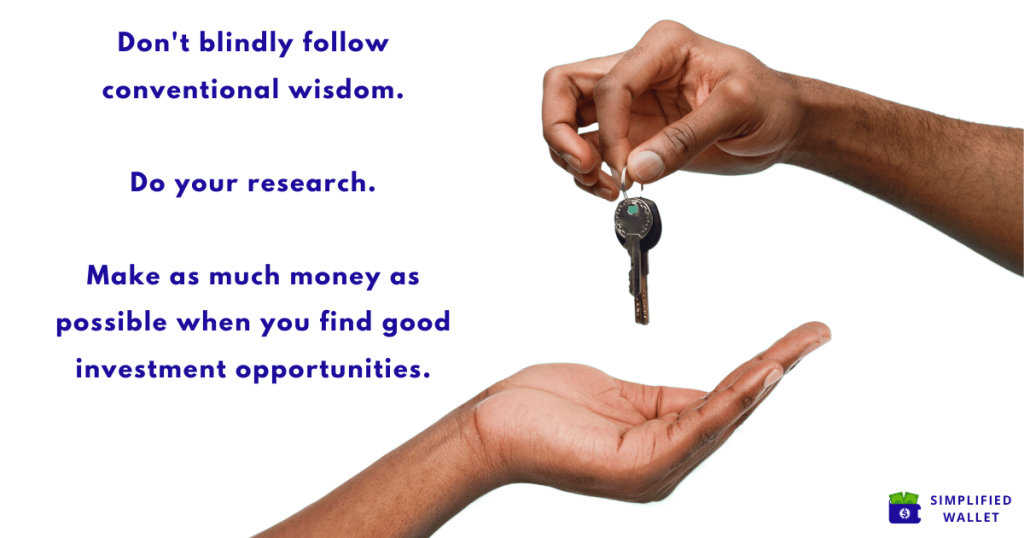
Don’t blindly follow conventional wisdom. Do your research. Make as much money as possible when you find good investment opportunities. I remember when I was deciding to cash out my 401K to invest in real estate. Many well-meaning friends gave me conventional advice. In hindsight, some of it was terrible advice.
I’m not saying everyone should cash out their 401K and invest in real estate. I have an MBA and have worked in the financial sector. I crunched the numbers and knew I had found a good opportunity that wouldn’t last. Do your research and understand what you are investing in.
It’s also crucial to find good mentors. Look for people who have successfully done what you want to do. Use their lives as an example. This is one of the reasons I love reading autobiographies. I have mentors I meet with in person and some I only know through books. Find new mentors when you outgrow or outlive your current mentors. Be careful who you choose as a mentor or who you invest with. If you have concerns about your mentor or investing partner, walk away. People can be terrible when money is involved.
My childhood has wired me to prepare for the worst, e.g., losing a job or the next cataclysmic financial crisis. Be humble about risks outside your control. I do everything I can to mitigate risks in my investing strategy. Still, I occasionally get blindsided by circumstances outside my control. Think about these instances as lessons learned. Don’t let this scare you from taking calculated risks. Scared money doesn’t make money. All investments carry some risk, so you can’t avoid it. Mitigate risk as best you can and keep investing even if some strategies do not pan out.
Let’s talk
We love hearing from you! What resonated with you from Alejandro’s story? What does financial success mean to you and how can you achieve it? Are there lessons you learned from his story?
Pause for 5 mins and consider what steps you can take today to achieve financial success.
Would you like to share your story? We love celebrating your milestones on the journey to financial success.
Alejandro is inspiring, I wonder if he is taking mentees.
Really liked his focus on how much cash comes in monthly, and the fact that his investments make roughly the same amount as his salary. As well as his philosophy on mistakes and learning.